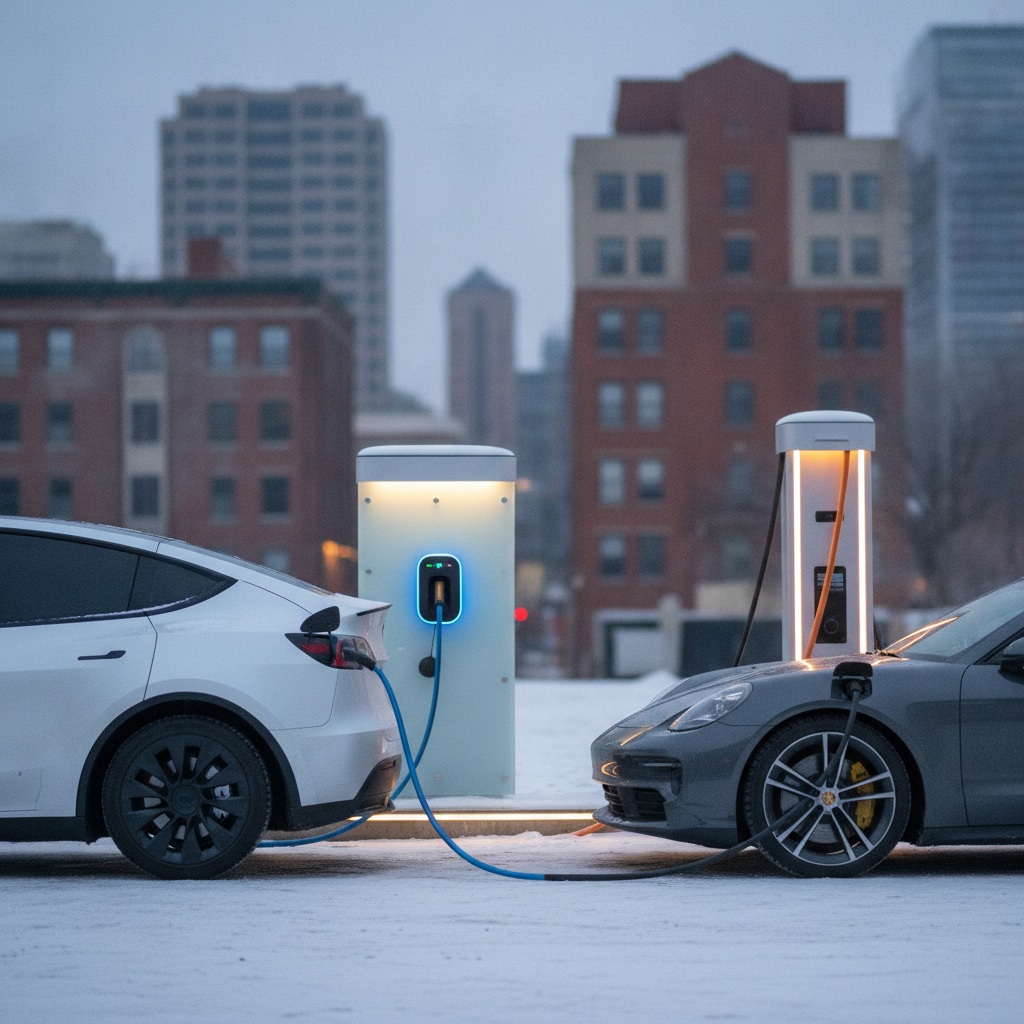
Pull into your driveway after a long day, plug in, and wake up to a full battery. That is the promise of home charging, but the experience depends heavily on one decision: which type of charger you choose. Drivers around Central New York are weighing two main options, Level 2 and DC fast charging, and the right answer is not the same for every household, storefront, or fleet. Anyone researching EV Charging Station Installation Syracuse NY quickly runs into jargon like kilowatts, amperage, connectors, and demand charges, which can make a simple choice feel complicated.
This guide breaks the decision down in plain language. We will compare how fast each type charges, what the electrical requirements look like, how the costs differ, and how cold upstate winters influence performance. We will also look at who tends to benefit most from each option, from a homeowner with a single commuter car to a business that wants to attract customers who are passing through. You will not find hype here. Instead, you will get practical ways to match your driving habits, your property, and your budget to the equipment that makes sense, so you can talk with an electrician armed with the right questions.
Understanding the Basic Difference Between the Two Charger Types
The core difference comes down to the kind of electricity delivered to the car. Level 2 chargers supply alternating current (AC) to the vehicle, and the car’s onboard charger converts it into the direct current (DC) the battery stores. DC fast chargers skip that step. They do the conversion inside the charging cabinet itself and push high-power direct current straight into the battery, which is why they can add range so quickly.
In everyday terms, Level 2 is the workhorse for overnight and workday charging, while DC fast charging is built for quick stops. A local team handling Cicero NY EV charger installation will typically start by asking how long your vehicle sits parked each day, because dwell time is the single best predictor of which type you need. If the car sits for eight hours, speed matters far less than convenience and cost. If it sits for twenty minutes, the story changes completely.
How Fast Each Option Actually Charges
Speed is where the two options separate most clearly. A typical Level 2 unit delivers somewhere between 7 and 19 kilowatts, depending on the circuit behind it and what your car can accept. That generally translates to a few dozen miles of range added per hour, enough to refill most daily commutes overnight with room to spare.
DC fast chargers operate in a different league, often delivering from roughly 50 kilowatts up to several hundred. Under good conditions, a compatible vehicle can recover a large share of its battery in the time it takes to grab a coffee. The catch is that your car sets the ceiling. A vehicle with a modest onboard limit will not charge faster just because the station is powerful, and charging speed also tapers as the battery fills. Many drivers are surprised to learn that the final stretch from eighty to one hundred percent crawls, which is why fast charging works best as a top-up rather than a full refill.
Electrical Requirements Behind Each Installation
What happens behind the wall often matters more than the charger itself. A Level 2 station usually runs on a dedicated 240-volt circuit, similar to what powers an electric dryer or range. Many homes can accommodate one with their existing service, although an older panel may need attention first. Choosing the right amperage is part of the process, and resources like How to Choose the Right EV Charger Size for Your Syracuse Home walk through how circuit size and vehicle capability fit together.
DC fast charging asks far more of a property. These units typically require three-phase power, heavy-gauge conductors, large breakers, and often a dedicated transformer or utility service upgrade. Coordination with the local utility can add weeks or months to a timeline. For this reason, DC fast charging is rarely a residential project. It is a commercial undertaking that demands engineering review, load calculations, and careful planning long before any equipment arrives on site.
Which Drivers and Properties Fit Each Approach
For most single-family homeowners, Level 2 is the clear winner. Your car is parked at home for long stretches, electricity rates are predictable, and the equipment fits within a normal residential service. Even drivers with long commutes can usually recover a full day of driving overnight. Rural and suburban households in particular benefit, because they often have a garage or driveway with easy access to the panel.
DC fast charging suits locations where vehicles stop briefly and turn over quickly. Think highway corridors, travel plazas, large retail centers, and delivery fleets that cannot afford downtime. Businesses weighing this route should also review practical guidance such as What Syracuse Businesses Need to Know Before Installing Customer EV Chargers, since customer behavior, parking layout, and signage all influence whether a high-power station earns its keep. For many small businesses, a few Level 2 ports serve customers and employees just as well at a fraction of the investment.
Comparing Cost, Speed, and Complexity Side by Side
A quick comparison helps put the tradeoffs in perspective. The table below summarizes general characteristics, though actual figures vary by equipment, site conditions, and utility rules.
| Feature | Level 2 | DC Fast Charging |
|---|---|---|
| Typical power | Roughly 7 to 19 kW | Roughly 50 kW and up |
| Power supply | Single-phase 240 volt | Three-phase, often utility upgrade |
| Best for | Homes, workplaces, long stays | Quick stops, fleets, corridors |
| Project complexity | Low to moderate | High |
| Upfront investment | Modest | Substantially higher |
What Professional EV Charging Station Installation Syracuse NY Looks Like
Whichever type you choose, the installation process follows a recognizable path. It begins with a site assessment, where an electrician examines your panel, available capacity, wire routes, and mounting locations. From there comes a load calculation to confirm your service can handle the added demand, followed by permitting, equipment selection, and the physical work.
Working with a licensed local contractor matters because electrical work tied to vehicle charging involves continuous high loads that punish shortcuts. Properly sized conductors, correct breakers, and secure terminations protect both the equipment and your property. Teams experienced in EV Charging Station Installation Syracuse NY will also schedule inspections and handle paperwork so the finished system is compliant and ready for use. Expect them to explain their recommendations clearly and to put the scope in writing before work begins.
Winter Performance and Cold-Weather Realities
Upstate winters change how both charger types perform, and drivers should plan accordingly. Cold batteries accept energy more slowly, so a car that charges quickly in July may take noticeably longer in a January freeze. Many vehicles precondition the battery when navigating to a fast charger, which helps recover some of that lost speed.
Level 2 has a quiet advantage here. Because the car sits for hours, a slower charge rate rarely inconveniences anyone, and a garage-mounted unit keeps you out of the snow entirely. Fast chargers, by contrast, are usually outdoors, so connectors and cables must tolerate ice, slush, and road salt. Equipment with sealed enclosures, durable cable management, and good drainage lasts longer. If you plan an outdoor installation of any kind, ask about weather ratings, heated cable options, and how the unit handles temperature swings.
Operating Costs and Electricity Pricing
Hardware is only part of the financial picture. Ongoing costs depend on how much electricity you use and how your utility bills it. Home Level 2 charging generally draws at standard residential rates, and many utilities offer time-of-use plans that reward off-peak charging, so scheduling your session for overnight hours can trim your bill.
Commercial fast charging introduces demand charges, which are fees based on your peak power draw during a billing period rather than total energy consumed. A single high-power session can set a costly peak for the whole month. Operators often manage this with load management software, battery storage, or by limiting the number of simultaneous sessions. Maintenance and network fees also add up. Before committing, request a realistic operating budget that includes electricity, software subscriptions, warranty terms, and periodic servicing, not just the purchase price.
Incentives, Rebates, and Planning Ahead
Financial support can shift the math, but programs change frequently, so verify details before relying on them. Federal tax credits, state programs, and utility rebates have at various times applied to charging equipment and installation. Eligibility often depends on factors like location, property type, and equipment specifications, so check current terms with the program administrator rather than assuming a particular amount.
Planning ahead can save real money. If you are building or renovating, running oversized conduit now costs far less than opening walls later. Homeowners who may buy an electric vehicle within a couple of years often install the circuit first and add the charger when needed. Businesses can design parking areas with future expansion in mind, leaving space and capacity for additional ports. An electrician can help you stage the project so the first phase fits your budget while keeping the door open to growth.
Common Mistakes to Avoid When Choosing a Charger
A few missteps show up repeatedly. The first is buying more speed than the vehicle can use. If your car caps at a modest AC rate, a larger Level 2 unit will not charge it faster, and you will have paid for capacity that sits idle. The second is ignoring the panel. Installing a charger without checking available capacity can trip breakers or create safety concerns, so confirm the numbers first.
Another frequent error is overlooking connector compatibility and network access. Make sure the plug type matches the vehicles you expect to serve, and understand whether the station requires an app, card, or subscription. Finally, some owners choose fast charging because it sounds impressive, then discover that low traffic never justifies the cost. Start with real data about how long vehicles park, how many people will use the station, and what they will pay or expect for free.
Choosing a Hybrid Strategy for Mixed Needs
You do not always have to choose one or the other. Some properties combine both. A business might install several Level 2 ports for employees and long-stay visitors, then add one fast charger to serve drivers who need a quick boost. This approach spreads cost and matches equipment to real behavior rather than forcing a single solution onto every user.
For homes, a hybrid mindset means installing a solid Level 2 setup and relying on public fast charging during road trips. That combination covers nearly every scenario without the expense of private high-power equipment. If you run a fleet, consider charging most vehicles overnight on Level 2 and reserving fast charging for vehicles that need a midday turnaround. Matching each charger to a specific job keeps utilization high and wasted capacity low, which is ultimately what makes any charging investment worthwhile.
Final Thoughts
The Level 2 versus DC fast charging question comes down to time, place, and purpose. If your vehicle rests for hours at a time, Level 2 delivers everything you need at a lower cost and with far simpler electrical requirements. If your goal is to serve drivers who stop briefly, such as travelers, rideshare operators, or fleets under tight schedules, fast charging earns its place, provided your site and budget can support the heavier infrastructure and ongoing demand charges.
Before you buy anything, gather the basics: how long your vehicles park, what your electrical panel can handle, which connectors you need, and how winter conditions will affect the setup. Ask for a written assessment, compare proposals on total cost of ownership rather than sticker price alone, and confirm any incentives directly with the source. Resources like EV Charging Station Installation in Syracuse, NY can help you understand what a complete project involves from start to finish.
Most residents and small business owners will find that a well-planned Level 2 installation covers their needs today and leaves room to grow tomorrow. Start with an honest look at your driving and parking patterns, bring in a licensed professional early, and build a system that fits the way you actually live and work. The right charger should feel invisible, quietly keeping your vehicle ready whenever you are.