Picture a guest pulling into your hotel after a long drive up the Thruway. The car is low on charge, the room is booked, and the first thing they want to know is whether there is somewhere to plug in. For a growing share of travelers, the answer to that question decides where they sleep. That is why EV Charging Station Installation Syracuse NY hoteliers consider today is quickly moving from a nice extra to a practical booking advantage.
Hospitality is a different animal from other commercial charging projects. Guests stay for hours or overnight, which changes everything about the type of charger you need, where it should sit, how it is billed, and how it looks next to your entrance. A restaurant or banquet venue has its own rhythm too, with short visits, event surges, and staff schedules to consider. Getting the planning right the first time saves you from expensive rework later.
This guide is written for hotel owners, inn operators, restaurant managers, developers, and anyone running a hospitality property in Central New York. We will walk through how dwell time shapes your equipment choice, how to size electrical capacity, how to price and brand the amenity, and how to prepare for winter. We will also cover guest communication, staffing, and the questions worth asking any installer before work begins. The goal is simple: help you build something guests actually use and remember, without overspending on hardware you do not need.
Why Guests Now Expect Charging on Site
Travelers plan routes around chargers the same way earlier generations planned around gas stations. When someone searches for lodging and filters by amenities, EV charging increasingly sits next to free breakfast and Wi-Fi. A property that offers it reduces range anxiety and gives a driver one less reason to book elsewhere.
The benefit is not limited to drivers of electric cars. Business travelers, wedding parties, and tour groups often include at least one EV owner, and that person frequently influences where the group stays. Having chargers also signals that a property is modern and well maintained, which can lift the overall impression of the brand.
For owners weighing the investment, a professional EV Charging Station Installation Syracuse NY project is best treated as an amenity upgrade rather than a standalone profit center. Think of it like adding a fitness room: it earns its keep through occupancy, reviews, and repeat bookings, with optional fees as a bonus rather than the whole business case.
Matching Charger Type to Guest Dwell Time
The single most important design question is how long vehicles will sit. Overnight guests park for ten to fourteen hours, which means a modest Level 2 unit can fully refill most batteries while the driver sleeps. Spending extra on faster hardware for those stalls rarely pays off, because the car will be full long before checkout.
Restaurants, cafes, and event spaces are the opposite. Visitors stay one to three hours, so a Level 2 charger gives a useful top-up, while a faster unit might make sense only if the site draws highway traffic. Mixed properties, such as a hotel with a busy restaurant, often combine both stall types.
A technician can help you compare speeds and costs, and our related breakdown of Level 2 vs. DC Fast Charging: Which EV Station Fits Syracuse Drivers? explains the tradeoffs in more depth. For most lodging properties, the sensible starting point is a handful of Level 2 ports, with room in the plan to expand as demand grows.
Working Out How Many Ports You Really Need
Hotels tend to overbuild or underbuild because they guess. A better method is to start from your occupancy and guest mix. Look at how many rooms you have, what share of guests are business travelers or out-of-state visitors, and how often cars with plug-in capability already show up in your lot.
A common approach is to install a small number of ports now and pre-wire conduit for more. Running empty conduit and sizing the panel with future capacity in mind costs far less than trenching the parking lot a second time. It also lets you add stalls one at a time as bookings justify them.
When you bring in a licensed local team such as Neave Electric Inc, ask them to walk the property before quoting. They can note the distance from your main service to the parking area, the condition of existing panels, and whether the lot is paved, gravel, or shared with a neighbor. Those details drive both cost and timeline more than the charger itself does.
Checking Electrical Capacity Before You Buy Hardware
Hospitality buildings already carry heavy electrical loads from kitchens, laundry rooms, HVAC, and pool equipment. Adding several chargers on top of that without a capacity review can trip breakers or force an expensive service upgrade. A load calculation done by a professional tells you how much headroom you truly have.
There are ways to stretch what you have. Power sharing between chargers lets several ports draw from a single circuit, throttling output when the building is busy and ramping up overnight when demand drops. This is often the difference between a modest upgrade and a major one.
If you are curious how that balancing works in practice, our guide on EV Charger Load Management Strategies for Syracuse Properties covers the main approaches. For most hotels, scheduling charging into off-peak overnight hours fits neatly with how guests already behave, since cars simply sit until morning.
Planning Layout, Signage, and Guest Experience
Where you place chargers shapes how guests feel about them. Stalls close to the lobby entrance feel convenient and safe, especially at night, and they double as visible advertising for drivers pulling in. Tucking them in a far corner may save on cable runs but hurts usage and perceived value.
Good lighting, clear pavement markings, and bright signage matter more than people expect. Guests should be able to spot an open charger from the driveway and understand how to start a session without calling the front desk. Reserved EV stalls need enforcement, so consider wording that discourages gas-powered cars from parking there.
Thinking through the whole electric vehicle charging setup for hotels as a guest journey, from the booking page to the parking space to checkout, helps you spot gaps. Mention charging in confirmation emails, list it on your website, and train front desk staff to answer basic questions about plugs, pricing, and availability.
Free Amenity, Paid Service, or Something in Between
Few decisions generate more debate among owners than pricing. Offering charging for free is simple and generous, and it works well when the electricity cost is small relative to a nightly room rate. Paid models make sense for restaurants, event venues, or properties that want to recover operating costs.
Networked chargers let you do either. You can set a per-kilowatt-hour rate, a flat session fee, or a time-based charge, and you can offer discounts to registered guests. Some properties bill the cost to the room, while others limit access with a code at check-in.
Whichever route you choose, state it clearly before the guest arrives. Surprise fees breed bad reviews, while a transparent policy builds goodwill. Remember to account for payment processing fees and any network subscription costs when you calculate what each session really earns.
Comparing Charging Options for Hospitality Sites
The table below summarizes how common setups fit different hospitality situations. Actual speeds and costs vary by vehicle and equipment, so treat it as a planning starting point rather than a quote.
| Property Type | Typical Dwell Time | Best Fit | Main Consideration |
|---|---|---|---|
| Hotel or inn | 8 to 14 hours | Level 2 ports | Overnight scheduling and power sharing |
| Restaurant or cafe | 1 to 2 hours | Level 2 ports | Turnover and stall signage |
| Event venue | 3 to 6 hours | Level 2, possibly more ports | Peak demand during events |
| Highway-adjacent lodging | Mixed | Level 2 plus faster unit | Higher electrical capacity needs |
Preparing Chargers for Central New York Winters
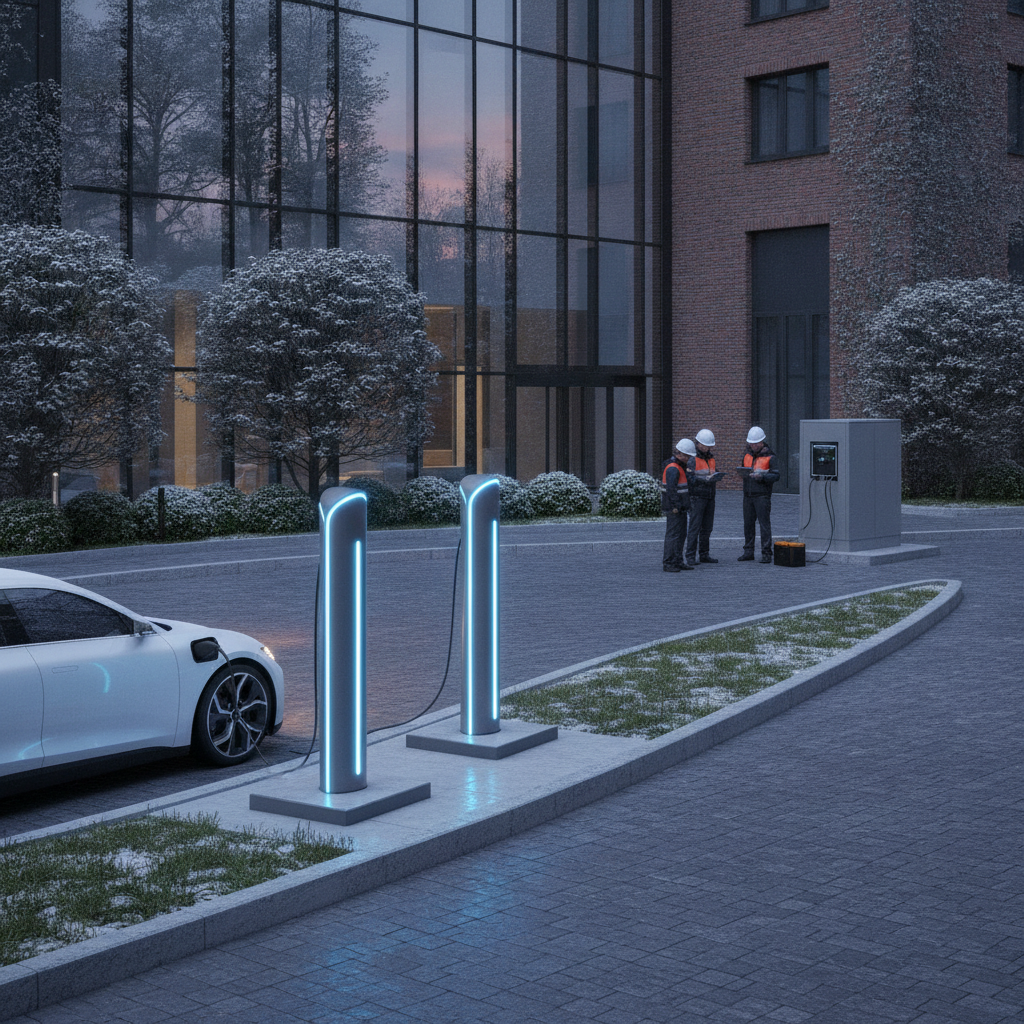
Lake-effect snow, road salt, and deep freezes are hard on outdoor equipment. Choose chargers rated for cold temperatures and rain, with sealed connectors and cables that stay flexible below freezing. Cable management matters too, since a cord left in a snowbank is a recipe for damage.
Placement affects maintenance. Stalls that sit away from plow piles and drainage runoff stay accessible all season, and wall or pedestal mounts keep equipment above the snow line. Coordinate with whoever plows your lot so they know where bollards and charging posts are located.
Plan seasonal upkeep as well. A quick inspection each fall, covering connectors, screens, grounding, and mounting hardware, catches small problems before the first storm. Keeping a spare cable or two on hand is a cheap way to avoid an out-of-order sign during a busy holiday weekend.
Permits, Inspections, and Utility Coordination
Commercial charger projects typically involve a permit, an electrical inspection, and sometimes a conversation with the local utility. Requirements differ by municipality and by project size, so confirm the specifics with your installer and local building office rather than assuming.
Utility coordination matters most when a service upgrade or new transformer capacity is involved, since those can take weeks or months to schedule. Starting that conversation early keeps your opening date realistic and avoids paying crews to wait.
Ask about incentives too. Programs for commercial charging come and go, and eligibility rules change, so check current offerings through the utility and state resources before you finalize your budget. A good contractor will help you document the project in a way that supports an application if one applies.
Accessibility, Safety, and Liability Considerations
Guests with disabilities deserve equal access to charging, and accessible stalls need adequate width, reachable controls, and a clear path from the space to the building. Planning these details early prevents costly corrections after inspection.
Safety features worth confirming include ground-fault protection, emergency shutoff, and cable retraction or holsters that keep cords off the pavement. Good lighting and camera coverage near the stalls also protect guests and vehicles, particularly during late-night arrivals.
Talk to your insurance provider before installation. Some carriers want to know about new equipment, and a short conversation can clarify coverage for damage or incidents involving chargers. Posting simple usage instructions and a contact number for issues reduces both confusion and complaints.
Choosing an Installer and Getting Started
The right contractor will ask more questions than you expect. They should want to know your service size, your occupancy patterns, your preferred payment model, and your growth plans. Be wary of quotes that arrive without a site visit or that ignore the electrical panel entirely.
Request a written scope that lists the hardware, conduit runs, trenching, permits, commissioning, and warranty terms. Ask who handles ongoing network support and what happens if a unit fails. References from other commercial clients in the region are worth the phone call.
Finally, set a realistic timeline. Equipment lead times, permit review, and utility work can stretch a project, so start well ahead of your busy season. A clear plan, a phased budget, and an installer who communicates openly turn a daunting build into a manageable one.
Where to Go From Here
Adding charging to a hotel, inn, restaurant, or event venue is less about chasing a trend and more about meeting guests where they already are. Drivers of electric vehicles are traveling through Central New York every week, and they choose lodging partly based on whether they can plug in. A thoughtful installation turns that need into a quiet competitive edge.
The core lessons are straightforward. Match the charger type to how long your guests actually stay, size your electrical capacity honestly, and leave room to grow rather than overbuilding on day one. Decide on pricing before you open, tell guests about the amenity early, and design stalls that are visible, lit, and accessible. Prepare the equipment for lake-effect winters, keep up with seasonal checks, and confirm permit and utility steps before you commit to a schedule.
Most importantly, work with a licensed team that looks at your whole property rather than just selling hardware. A site walk, a load review, and a written scope will tell you far more than a generic quote ever could. If your property is in the Cicero area or anywhere nearby, start by listing your goals, your parking layout, and your busiest months, then bring that to a local electrician. With a clear plan, you can launch a charging amenity that guests notice, appreciate, and talk about in their reviews.