
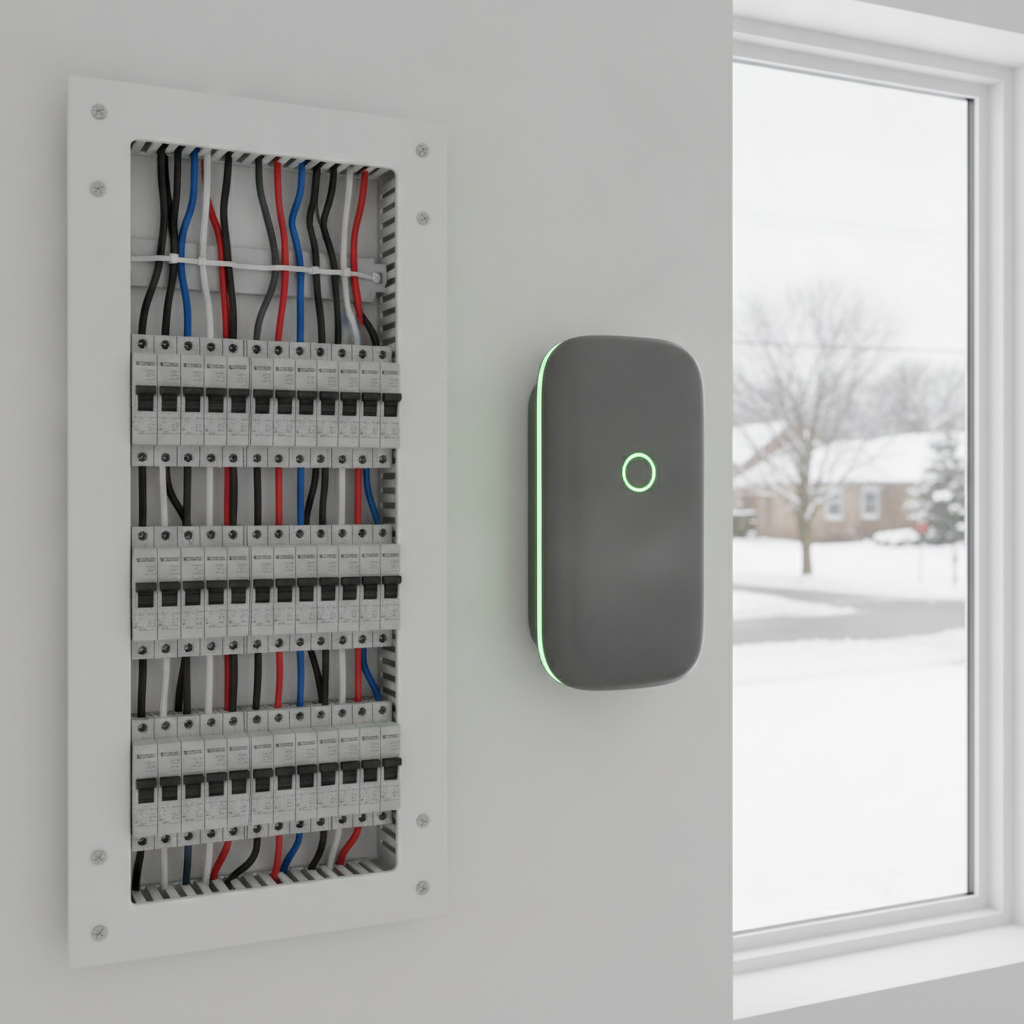
Most property owners start with a simple plan: install one charger and see how it goes. Then a second driver asks to plug in. Then a third. Suddenly the question changes from “where do we put a charger?” to “can our building actually handle all of this?” That is exactly where EV Charging Station Installation Syracuse NY projects either go smoothly or hit an expensive wall.
Here is the thing about electrical service: it is a fixed pipeline. Your utility delivers a set amount of power to your property, your main panel divides it among every circuit, and everything you plug in competes for a slice. A single Level 2 charger is a big appliance, closer to an electric dryer or a range than a lamp. Add a second, third, or fourth, and you are asking that pipeline to carry something it may never have been sized for, especially in older Syracuse buildings that were wired long before anyone imagined electric cars.
The good news is that most properties can support more than one charger when the project is planned correctly. The key is understanding your existing capacity before you buy equipment, knowing which tools stretch that capacity further, and building in room to grow. This guide walks through how electrical service really works, how to measure what you have, and which strategies let several chargers share limited power without tripping breakers or triggering costly service upgrades. Whether you manage a small office, a rental property, or a growing retail space, you will leave with a practical framework for making smart decisions.
How Electrical Service Capacity Actually Works
Every property receives power through a service entrance, measured in amps. Many older homes and small buildings have 100 amp service, while newer homes and commercial spaces often have 200 amps or more. Think of that number as the total size of the pipe feeding everything inside, from lighting and heating to appliances and, now, vehicles.
A typical Level 2 charger draws somewhere in the range of 30 to 50 amps continuously, and electrical rules treat vehicle charging as a continuous load, which means circuits are sized with extra headroom built in. Two chargers at full draw can easily consume a large share of a 200 amp service on their own. That is before counting the furnace, water heater, kitchen equipment, or commercial HVAC already running on the same panel.
Understanding this explains why a quick plug-and-play approach often fails at scale. If you want a broader look at what is available to support projects like this, you can click here to browse the full range of electrical services before you start planning your layout.
Measuring Your Available Capacity Before You Buy Anything
Before choosing hardware, a licensed electrician performs what is commonly called a load calculation. This is a structured assessment of how much power your property uses at its busiest moment and how much headroom remains. It is not guesswork, and it should not be skipped, because the results shape every decision that follows.
There are two common approaches. The calculation method adds up the rated loads of everything in the building using standard formulas. The monitoring method records actual peak demand over a period of time, which often reveals that a property uses far less than the nameplate numbers suggest. Real usage data can sometimes unlock extra capacity without any equipment upgrade at all.
You can gather useful information yourself before the visit. Locate your main panel and note the amperage printed on the main breaker. Photograph the panel label and the breaker layout. Write down large appliances and equipment, and note any plans to add heat pumps, kitchen equipment, or additional tenants. Handing this to your electrician speeds up the assessment and keeps quotes accurate.
Panel Space, Breaker Slots, and the Hidden Bottlenecks
Total amperage is only half the story. A panel can have plenty of electrical capacity and still be physically full. Each charger typically needs its own dedicated double-pole breaker, which occupies two slots. If your panel is packed with existing circuits, there may be nowhere to add the new breakers even though the service itself could handle the load.
Other hidden bottlenecks show up during inspection. Aging panels from certain manufacturers can be unreliable under sustained loads. Aluminum feeder wires, undersized neutral conductors, and corroded bus bars all limit what you can safely add. In Central New York, damp basements and unconditioned utility rooms can accelerate corrosion, so condition matters as much as capacity.
Sometimes the cleanest answer is a subpanel dedicated to charging. A subpanel installed near the parking area gives you breaker slots exactly where you need them and shortens the wire runs to each unit. Quality EV charger wiring starts with these decisions, because the conductors, conduit, and breaker sizing must all match the equipment you choose and the distance it sits from the panel.
Dynamic Load Sharing Instead of Bigger Service
If your calculations come up short, a service upgrade is not your only option. Load management hardware lets multiple chargers share a fixed amount of power intelligently, so the total never exceeds what the circuit can deliver. This is often the most cost-effective path for properties that want several chargers but do not want to pay for a larger utility connection.
Here is how it works in practice. Imagine four chargers sharing a 100 amp allocation. When one car is plugged in, it receives the full power. When four cars arrive, the system divides the available current among them, so each charges at a reduced rate. As vehicles finish and unplug, power flows back to those still charging. Nobody trips a breaker, and nobody gets locked out.
Some systems go further by monitoring the whole building. If your heating system or kitchen equipment spikes, chargers automatically throttle down and ramp back up when demand eases. For many small businesses, overnight charging means cars are plugged in for eight or more hours, so even a slow shared rate fills batteries by morning without anyone noticing the difference.
Planning for Chargers You Do Not Need Yet
One of the smartest moves at the design stage is installing infrastructure for the future while buying only the hardware you need today. Running larger conduit, pulling extra pathways, and sizing the subpanel generously costs relatively little during the first project but becomes expensive to retrofit later, once concrete is poured and walls are closed.
This approach is often called “make-ready” planning. You install one or two chargers now, but the trench, conduit, and panel capacity can support four, six, or more. When demand grows, adding a unit becomes a matter of mounting hardware and landing wires rather than tearing up pavement again.
Local expertise matters here, because every site presents different trenching conditions, distances, and frost considerations. If you are weighing options for a commercial lot or multi-space property, a provider experienced in EV charger installation Cicero NY can map out a phased plan that protects your budget now while leaving a clear, affordable path to expansion as more drivers show up.
Single Charger vs. Multiple Chargers: A Quick Comparison
The table below summarizes how the electrical picture changes as you scale from one unit to several. Treat the figures as general illustrations rather than exact requirements, since every property differs and a licensed electrician must confirm the details for your site.
| Setup | Typical Electrical Impact | Common Solution |
|---|---|---|
| One Level 2 charger | One dedicated circuit, often fits on a 200 amp panel | Dedicated breaker and direct wiring run |
| Two chargers | Large share of available capacity on smaller services | Load calculation plus possible load sharing |
| Four or more chargers | Often exceeds existing service without management | Subpanel, dynamic load management, or service upgrade |
| Phased make-ready plan | Upfront infrastructure, chargers added as demand grows | Oversized conduit and panel capacity from day one |
When a Service Upgrade Is Truly Necessary
Sometimes load management cannot close the gap. If your property has modest service, heavy existing loads, and a goal of fast charging for many vehicles at once, a larger service entrance may be the honest answer. Upgrading means a new meter base, new service conductors, and often a new main panel, plus coordination with the utility.
Warning signs that point toward an upgrade include a main breaker that already trips under normal use, a calculated load that exceeds capacity even with management, or plans for fast-charging equipment that draws far more power than Level 2 units. Properties planning other major electrification, such as heat pumps or electric cooking, often find it makes sense to upgrade once and cover everything.
Timing deserves attention. Utility work can take weeks or longer depending on scheduling and equipment availability, so build that into your project calendar. An upgrade is a meaningful expense, but spread across years of tenant satisfaction, customer visits, or employee benefits, many owners find it pays for itself in a way that a cramped, overloaded system never could.
Older Buildings and Wiring Surprises
Syracuse has no shortage of older homes, converted multifamily buildings, and commercial spaces with decades of layered electrical work. These properties can hide surprises that only appear once a project begins. Ungrounded circuits, overloaded legacy panels, and undocumented splices are all real possibilities, and each one affects how many chargers you can safely add.
A thorough walkthrough before quoting helps catch these issues early. Your electrician should open the panel, inspect the feeder, check grounding, and trace where new circuits will run. Be wary of any estimate that arrives without a site visit, because surprises discovered mid-project turn into change orders.
If your property has older lighting circuits that are already struggling, resolve them first so new loads are not stacked on a weak foundation. Our guide on How Professional Electricians Handle Lighting Installation for Syracuse Remodels explains how pros evaluate existing circuits, and the same careful mindset applies when charging equipment enters the picture.
Spotting Wiring Problems Before They Limit You
Charging equipment runs for hours at a stretch, which exposes weaknesses that ordinary household use never reveals. A connection that is slightly loose, a conductor that is marginal, or a breaker that is tired can all become heat sources under sustained load. Catching these problems before installation is far cheaper than diagnosing them afterward.
Pay attention to everyday warning signs around your building: flickering lights when large appliances start, warm cover plates, buzzing from the panel, or breakers that trip without an obvious cause. These symptoms suggest the existing system is already working hard, and adding chargers on top may make things worse.
It helps to know what a failing circuit looks like in practice. Read Signs Your Syracuse Home Needs a Lighting Rewire Before New Fixtures to see the kinds of red flags electricians look for, because the same symptoms often signal that a wider electrical evaluation should come before any charger project moves ahead.
Permits, Inspections, and Utility Notice
Multi-charger projects almost always involve more paperwork than a single residential unit. Expect your electrician to pull a permit through the local authority, schedule inspections, and in some cases notify the utility when the load on your service changes meaningfully. Requirements vary by municipality, so rely on your licensed contractor to confirm what applies to your address.
Inspections serve a practical purpose. An inspector verifies that conductors are sized correctly, breakers match the equipment, grounding is sound, and installations are protected where required. Passing inspection also protects you with insurers, who may ask for documentation if a claim ever involves electrical equipment.
Ask your electrician early who handles each step. A good contractor manages permits, coordinates inspection timing, and keeps you updated rather than leaving you to chase approvals. Keep copies of everything, including load calculations, permits, and inspection sign-offs. This record becomes valuable if you later sell the property, add tenants, or expand your charging setup.
Budgeting for a Multi-Charger Project
Costs for multiple chargers vary widely, and anyone quoting a firm number without seeing your site should be treated with caution. The main drivers are predictable, though. Distance from the panel to the parking area determines wire and trenching costs. Panel condition decides whether you need a subpanel or replacement. The number and type of chargers sets hardware cost, and management features add to that.
Think in layers. First is the infrastructure layer: panel work, conduit, trenching, and conductors. Second is the equipment layer: the chargers themselves and any networking or payment features. Third is the soft cost layer: permits, inspections, and design. Separating these in your quotes makes comparisons fair and reveals where one bid is quietly padding another.
Also investigate incentives. Utilities, state programs, and federal initiatives have offered rebates and credits for charging equipment and installation at various times, but availability and eligibility change, so verify current details directly with the program administrators before counting on any savings in your budget.
Your Next Steps
So, can your electrical service support multiple EV chargers? For most properties, the honest answer is yes, with the right planning. The deciding factors are not mysterious. They come down to how much capacity your service has, how much of it you already use, whether your panel has physical room, and whether smart load management can stretch what you have.
Start with information. Photograph your panel, note your main breaker size, and list the major equipment in the building. Then request a professional load calculation so decisions rest on real numbers rather than assumptions. From there, decide how many chargers you need now, how many you might want in a few years, and whether a phased make-ready approach makes sense for your budget.
Avoid the two classic mistakes. The first is buying chargers before confirming capacity, which leads to tripped breakers and rework. The second is building only for today, which forces expensive digging and panel changes the moment demand grows. A thoughtful design avoids both.
Work with a licensed local electrician who will visit the site, explain trade-offs plainly, handle permits, and stand behind the installation. Done well, your charging setup becomes an asset that serves tenants, customers, and employees for years, without ever putting your electrical system under strain.