
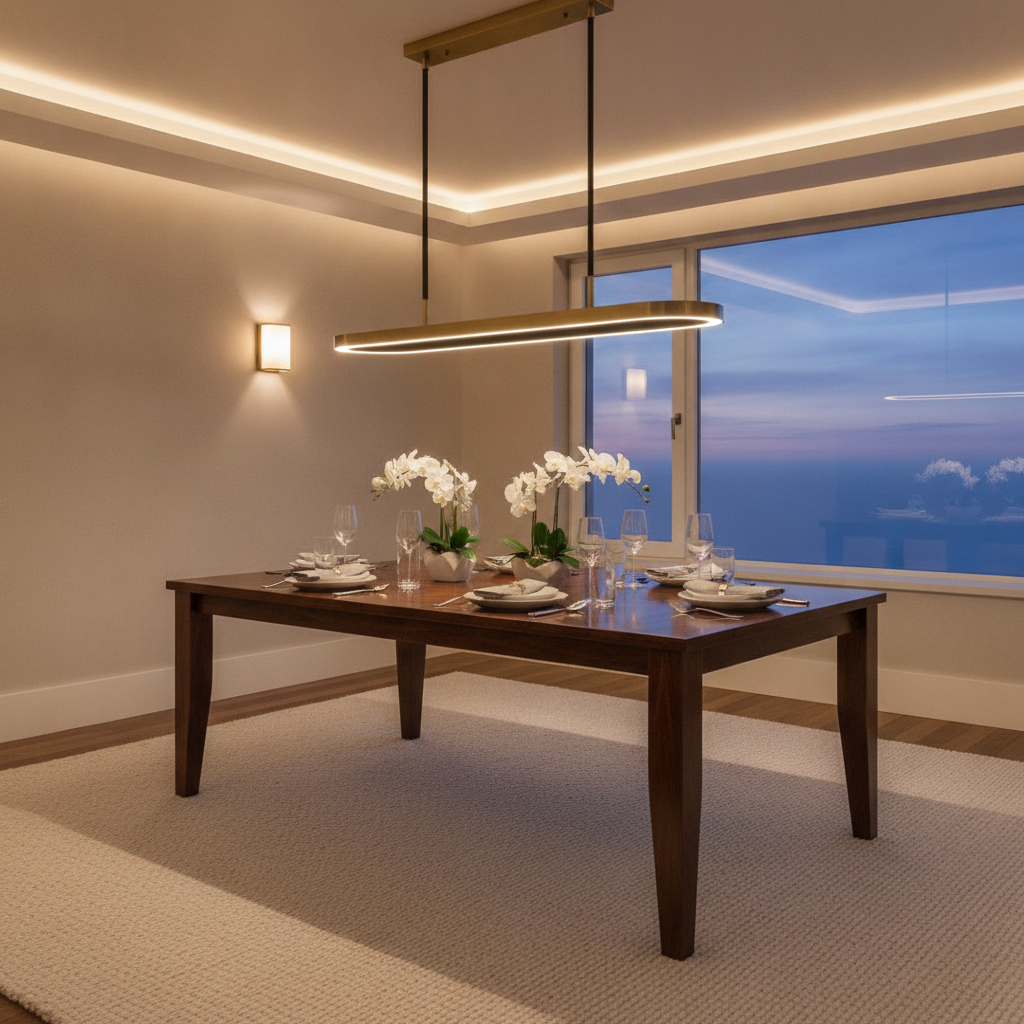
Think about the last great meal you shared at home. Chances are the food mattered, the company mattered, and the light quietly shaped the whole evening. A dining room that glows warmly makes a weeknight pasta feel special, while a harsh overhead blast can make even a holiday feast feel like an office meeting. That is why lighting installation in Cicero homes deserves more attention than it usually gets when people plan their dining spaces.
Dining rooms are unusual because they serve so many moods. On Tuesday, the table might be a homework station. On Friday, it hosts a candlelit dinner for two. On Sunday, it holds twelve relatives, a turkey, and plenty of noise. A single fixture on a single switch cannot meet all of those needs, and that is where thoughtful design and proper installation come in.
In this guide, we walk through how to build a flexible dining room lighting plan from the ground up. You will learn how layers of light work together, where to place fixtures relative to the table, how dimmers and controls change the experience, and what to consider before anyone cuts into a ceiling or opens a wall. Whether you are renovating, building new, or simply tired of a dim and flat room, you will find practical ideas you can bring to your electrician and your next dinner party.
Start With How Your Family Actually Uses the Table
Before choosing a single fixture, spend a week noticing how the dining room really works. Is it used daily or only for special occasions? Does it double as a workspace, a craft station, or a spot for board games? The answers shape every decision that follows, because lighting that suits a formal dinner often fails a family that eats there every night.
Write down the three or four most common activities and the mood each one needs. Reading a menu or doing homework wants bright, even light. A romantic dinner wants low, warm, and focused light. Entertaining wants a gentle glow that flatters faces and makes conversation feel easy. This simple list becomes your design brief, and it helps a professional team like Neave Electric Inc recommend the right mix of fixtures, circuits, and controls instead of guessing.
It also helps to note the room’s natural light. A west-facing window can flood the space at dinner time in summer, while winter evenings in upstate New York arrive early and dark. Your plan should work in both situations without feeling like two different rooms.
The Three Layers Every Dining Room Needs
Designers talk about layered lighting because no single source does everything well. A dining room benefits from three layers working together: ambient, task, and accent. Ambient light fills the room with a comfortable base level of brightness. Task light helps people see their plates and conversation partners clearly. Accent light adds depth by highlighting art, a sideboard, or a textured wall.
In practice, the table fixture often handles both ambient and task duties, while wall sconces, a buffet lamp, or picture lights supply the accent layer. Recessed lights can add ambient fill around the edges, but they should be placed carefully so they do not shine straight down onto diners and create harsh shadows under their eyes.
The key idea is control. Each layer should ideally sit on its own switch or dimmer so you can raise one and lower another. A room with only one switch gives you two choices, on and off. A room with three controlled layers gives you dozens of moods, and that flexibility is the real luxury of a well-planned dining space.
Sizing and Hanging the Centerpiece Fixture
The fixture above the table is the star of the room, and its size and height matter more than its style. A common rule of thumb is to choose a fixture roughly one half to two thirds the width of the table. Too small and it looks lost. Too large and it crowds the room and the people sitting beneath it.
Height is just as important. Many designers suggest hanging a chandelier or pendant so the bottom sits around 30 to 36 inches above the tabletop, adjusting for ceiling height and fixture style. Hang it too low and it blocks sight lines across the table. Hang it too high and it loses intimacy and throws glare into eyes.
For a long rectangular table, consider two or three smaller pendants in a row instead of one big fixture. They distribute light evenly and echo the shape of the table. Whatever you choose, make sure the ceiling box is rated to carry the weight. Heavy chandeliers need properly supported electrical boxes, which is one reason professional Cicero NY lighting installation for dining rooms is safer than a weekend swap that relies on the old box.
Dimmers: The Secret to Every Occasion
If you only make one upgrade, make it a dimmer. A good dimmer turns a single fixture into a mood machine. At full brightness, the room is ready for homework, cleaning, or a big family meal. At thirty percent, it becomes a soft, candle-like backdrop for a quiet dinner. The electricity cost is minimal, and the effect on atmosphere is dramatic.
Compatibility is the catch. Not every bulb works with every dimmer, and mismatches cause buzzing, flickering, or a limited dimming range. LED bulbs in particular need dimmers designed for low electrical loads. Choosing the right pairing during installation avoids those annoyances and helps your bulbs last longer.
Consider smart dimmers too. They let you save favorite scenes, such as Dinner Party, Weeknight, or Dessert, and recall them with one tap or a voice command. Some can follow a schedule that gently brightens the room for breakfast gatherings. Even without a full smart home setup, a single quality dimmer on the main fixture is the most cost-effective way to make a dining room feel custom.
Choosing Warm Light That Flatters Food and Faces
Light color changes how food looks and how people feel. Warm white light in the range of roughly 2200K to 2700K tends to make wood tones richer, skin warmer, and meals more appetizing. Cooler, bluish light can make a roast look gray and a room feel clinical. For most dining rooms, warm is the safe and flattering choice.
Pay attention to color rendering as well. A bulb with a high color rendering index shows reds, greens, and browns more accurately, so a salad looks fresh and a steak looks juicy. Cheap bulbs sometimes skimp here, and the difference is easy to notice side by side.
Some LED products offer warm dimming, which shifts the color warmer as the brightness drops, mimicking the glow of an old incandescent or a candle. That feature is especially lovely in a dining room, where evening dinners naturally call for a cozier tone. If you want a lighting plan that gets this level of detail right, working with a Lighting Installation Electrician in Syracuse, NY ensures the bulbs, fixtures, and controls are chosen as a matched system.
Wall Sconces, Buffet Lamps, and Accent Lighting
Once the main fixture is settled, accent lighting adds the polish that separates a nice room from a memorable one. Wall sconces flanking a mirror or sideboard bring light to eye level, which is far more flattering than light from above. They also fill in the dark corners that a single chandelier leaves behind.
A buffet or console against one wall can hold a pair of table lamps, which are easy to add if an outlet is nearby. For a cleaner look, an electrician can wire sconces or picture lights directly into the wall, hiding cords entirely. Planning those wire runs is far easier before drywall is finished, but they can still be added in many existing homes with careful fishing and patching.
Do not forget display pieces. A small, well-aimed picture light or a recessed accent spot can turn a favorite painting or china cabinet into a glowing feature. Keep accent lights dimmable and on a separate switch so they can stay softly on after the main fixture is turned down, quietly setting the tone for the whole evening.
Matching Lighting Plans to Different Dining Occasions
Different gatherings call for different settings, and a well-built system can deliver all of them. The table below shows how layers and brightness might shift across common occasions, so you can imagine how your own room would perform.
| Occasion | Main Fixture | Sconces and Accents | Overall Mood |
|---|---|---|---|
| Homework or work session | Full brightness | Off or low | Clear and focused |
| Everyday family dinner | 60 to 70 percent | Low glow | Relaxed and welcoming |
| Romantic dinner | 20 to 30 percent | Soft accents on | Intimate and warm |
| Holiday feast | 70 to 80 percent | Sconces on, picture lights on | Festive and bright |
| Dessert and conversation | 30 to 40 percent | Accents on | Cozy and unhurried |
Wiring, Switches, and Planning Behind the Walls
The best dining room lighting is built on decisions you never see. Each lighting layer needs a circuit path, a switch location, and a control type, and the time to plan them is before walls are patched or painted. A switch bank near the room entrance, with separate dimmers for the main fixture, the sconces, and the accents, is the classic setup and works beautifully.
Existing homes add a few wrinkles. Older wiring may not include a neutral wire at the switch box, which some smart dimmers require. Ceiling boxes may be undersized or unsupported for a heavy chandelier. A careful electrician checks these details first, because discovering them mid-project is how budgets and schedules slip.
Ask whether the new fixture will draw a different load than the old one, and whether the circuit has capacity for added sconces or recessed lights. A quick conversation about how many fixtures will share a circuit prevents nuisance tripping later. Good planning also leaves room for future upgrades, like adding a smart hub or swapping bulbs, without reopening walls.
Smart Controls and Energy Efficiency
Modern controls make dining room lighting both easier and cheaper to run. LED bulbs use a fraction of the energy of older incandescent ones and last far longer, which means fewer awkward moments on a ladder reaching for a chandelier. Pairing LEDs with dimmers stretches savings even further, since lowering brightness lowers power use.
Smart switches add convenience. You can set scenes, schedule lights to come on before you arrive home, or control the room by voice while your hands are full of dishes. Some systems learn your routine and adjust automatically. The important thing is choosing controls that are reliable and easy for every family member to use, not just the person who set them up.
Keep a simple manual option as well. Guests should be able to walk in and use a wall switch without downloading anything. The best systems feel invisible: lights respond to the way people already behave, and the technology fades into the background while the room does its job.
Common Dining Room Lighting Mistakes to Avoid
A few errors show up again and again. The first is relying on one fixture and one switch, which leaves the room either too bright or too dark. The second is a chandelier hung too high or too low, which spoils sight lines and comfort. The third is choosing bulbs by price alone, leading to harsh color, flicker, or a poor match with the dimmer.
Another frequent mistake is recessed lights placed directly over the table, which cast shadows across faces and make food look flat. Placing them toward the room’s perimeter, or using adjustable gimbal trims aimed at walls and art, gives a softer result. Ignoring glare is similar: exposed bright bulbs at eye level are uncomfortable, so choose shades or diffusers that hide the light source.
Finally, many people forget about maintenance. A chandelier with dozens of tiny bulbs becomes a chore to keep lit. Consider long-life LEDs, and make sure the fixture can be lowered or accessed safely. Planning for the next ten years prevents regret more than any single design choice.
Hiring Help for a Safe, Beautiful Result
A dining room lighting project can look simple on a screen and turn complicated once a ceiling is open. Heavy fixtures, hidden wiring, multiple switches, and dimmer compatibility all reward experience. Professional installation protects your home from loose connections and overloaded circuits, and it keeps the finished room looking clean, with cords hidden and fixtures hung level.
When you interview electricians, ask about licensing and insurance, how they handle patching and cleanup, and whether they can advise on fixture placement and controls rather than just hanging whatever you bought. Bring photos of your room, a list of how you use the space, and inspiration images. The more context you share, the better the plan will fit your life.
Residents in the Cicero area can find local professionals who understand the older and newer homes common here. Request a written scope and estimate so everyone agrees on fixtures, switches, and timing before work begins. A clear plan keeps the project calm, predictable, and on budget.
Bringing the Whole Room Together
A great dining room is really many rooms in one, and lighting is what lets it change character as the evening unfolds. By thinking in layers, sizing and hanging the centerpiece correctly, adding dimmers, choosing warm and flattering bulbs, and planning wiring before walls close, you build a space that supports every kind of gathering, from a rushed Tuesday to a long holiday dinner.
Start small if you need to. A single dimmer on the main fixture is a meaningful upgrade, and you can add sconces, accent lights, and smart scenes over time as your budget allows. What matters is having a plan, so each addition fits a larger picture instead of becoming a patchwork of mismatched parts.
If you are ready to move forward, gather your notes on how the room is used, pick a few fixture ideas you love, and talk to a licensed electrician about wiring, controls, and safe mounting. With the right preparation, your dining room can become the warmest, most flexible room in the house, a place where every meal, big or small, feels like an occasion worth remembering.