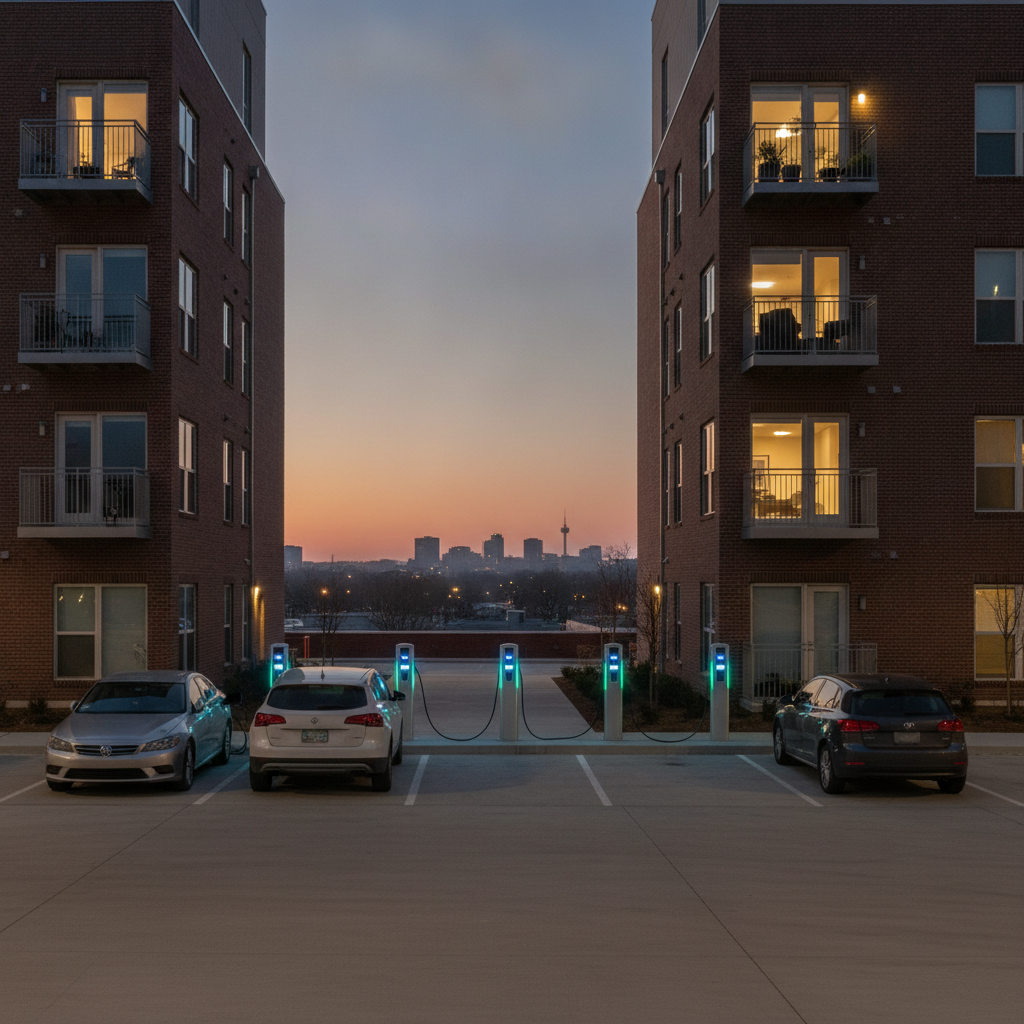
Ask any leasing agent what prospective renters want these days, and electric vehicle charging is climbing the list right alongside in-unit laundry and fast internet. For owners of multifamily buildings, EV Charging Station Installation Syracuse NY is no longer a novelty amenity reserved for luxury towers. It is quickly becoming a practical way to keep occupancy high, attract tenants who stay longer, and future-proof an asset that may be around for decades.
The challenge is that apartment charging is a very different animal from a single-family garage install. You are dealing with shared parking, multiple users with different schedules, billing questions, aging electrical rooms, and long Central New York winters that punish any shortcut in equipment or wiring. A homeowner can mount one charger on a garage wall and call it done. A property manager has to think about who pays for the electricity, who gets access, how many spaces to serve now versus later, and how to avoid overloading a building that was wired before anyone imagined a parking lot full of plug-in cars.
This guide walks through the decisions that matter most for apartment complexes and property managers: assessing your electrical capacity, choosing between charging models, handling billing and access, planning for growth, and working with a qualified electrician from the first walkthrough to the final inspection. Whether you manage a 12-unit walk-up or a sprawling garden-style community, the goal is the same: a reliable charging program that residents actually use and that does not become a maintenance headache.
Why Apartment Charging Is Becoming a Leasing Advantage
Renters who drive electric vehicles face a real problem: many of them cannot charge where they sleep. Without a garage or dedicated driveway, they rely on public stations, which means planning errands around charging and paying premium rates. A complex that solves this problem stands out immediately in a crowded rental market.
The business case goes beyond marketing. Residents with reliable home charging tend to renew leases because switching buildings means losing a convenience they depend on daily. Charging also lets you attract a demographic that often skews toward stable employment and longer tenancy. Some owners even structure modest usage fees that offset electricity costs and a portion of the equipment investment over time.
Working with a licensed team for EV charger installation Cicero NY and the surrounding region means your project starts with a proper site evaluation rather than guesswork, which protects both your budget and your building.
Start With an Honest Look at Your Electrical Capacity
Before you pick a single charger, find out what your building can actually deliver. Many older apartment properties have main service sized for lighting, appliances, and heating loads from another era. Adding even a handful of 40 or 50 amp circuits can push a service past its safe limit if nobody does the math first.
A qualified electrician will perform a load calculation that accounts for existing demand, the condition of your meter bank and main panel, and the distance from the electrical room to the parking area. Long conduit runs across a lot add real cost, so the location of your service equipment often shapes where chargers should go.
If capacity is tight, you have options short of a full service upgrade. Smart load management can share available power among several chargers, throttling output when demand peaks. For a broader look at what a professional installation involves, see the details on EV Charging Station Installation in Syracuse, NY, which covers scoping, equipment, and code-compliant wiring.
Choosing a Charging Model That Fits Your Property
There is no single right setup for every complex. The best model depends on your parking layout, resident mix, and how much capital you want to commit upfront. The three most common approaches each solve a different problem.
- Shared community chargers: a few stations placed in common parking that any enrolled resident can use on a first-come basis.
- Assigned-space chargers: a charger tied to a specific tenant’s reserved spot, often with the cost passed through to that resident.
- Make-ready infrastructure: conduit, panel capacity, and wiring installed for many spaces now, with actual chargers added as demand appears.
Shared chargers are the simplest starting point and work well for smaller properties. Assigned-space installs give heavy users certainty but require clear lease language. Make-ready is the smartest long-term play for larger complexes because trenching and conduit are the expensive parts, and doing them once is far cheaper than reopening pavement later.
Level 2 Is Usually the Right Answer for Residents
Residents typically park for hours at a time, often overnight, which makes Level 2 charging the natural fit for apartments. A standard Level 2 unit adds meaningful range while a car sits parked, and the equipment costs far less to install and operate than high-power DC units designed for quick public top-ups.
DC fast charging has its place along highways and retail corridors, but it demands substantial electrical service, larger transformers, and significantly higher investment. For a residential community, those costs rarely pencil out because the parking behavior simply does not require speed.
If you want to compare the tradeoffs in more depth, this breakdown of Level 2 vs. DC Fast Charging: Which EV Station Fits Syracuse Drivers? explains how charging speed, cost, and use case line up. For most apartment owners, a dependable Level 2 network delivers the best balance of resident satisfaction and return on investment.
Billing, Access, and Who Pays for the Power
Electricity has to be paid for by someone, and how you handle that determines whether the program runs smoothly or breeds resentment. The cleanest approach is a networked charger that tracks each session and bills the user directly, so you are never subsidizing a neighbor’s commute.
Networked stations let you set rates, restrict access to residents, and pull usage reports without chasing anyone down. Some property managers choose to absorb costs and treat charging as an included amenity, which can work if you bundle it into rent. Others add a flat monthly fee for reserved spots. Each option has tradeoffs worth running past your accountant.
Metering matters too. Tying a charger to a tenant’s own meter keeps billing simple but limits flexibility, while a dedicated house meter with software-based billing offers more control. If you want help thinking through the setup for your building, you can click here to reach a licensed electrician who can walk through the options with you.
Quick Comparison of Common Apartment Charging Setups
The table below summarizes how the most common approaches compare so you can match one to your property. Costs and timelines vary widely depending on distance from the panel, trenching needs, and equipment choices, so treat these as general comparisons rather than quotes.
| Setup | Best For | Main Advantage | Main Drawback |
|---|---|---|---|
| Shared community chargers | Small to mid-size complexes | Low upfront cost, easy rollout | Competition for open spots |
| Assigned-space chargers | Properties with reserved parking | Guaranteed access for users | More wiring and lease language |
| Make-ready infrastructure | Larger or growing communities | Cheaper expansion later | Higher initial investment |
| Load-managed network | Buildings with limited capacity | Avoids costly service upgrades | Slower charge at peak times |
Planning the Layout of Your Parking Area
Where you place chargers affects both cost and daily usability. Locating stations close to the electrical room shortens wire runs and trims expenses, but the spaces still need to be convenient and safe for residents arriving after dark. Good lighting, clear signage, and a firm surface matter as much as the equipment.
Think about cable reach and traffic flow. A charger positioned between two spaces can serve both, cutting equipment count in half. Make sure plug-in vehicles can pull in without blocking drive aisles or fire lanes, and consider wheel stops or bollards to protect equipment from stray bumpers in tight lots.
Accessibility deserves early attention. At least some charging spaces should accommodate residents with mobility needs, which affects spacing, surface slope, and reach height. Planning this upfront avoids expensive rework and ensures your program serves everyone who lives in the community rather than a narrow slice of it.
Built for Central New York Winters
Snow, ice, road salt, and deep freezes are hard on outdoor electrical equipment. Chargers meant for apartment lots should carry weather ratings suited to harsh conditions, with sealed enclosures, durable cables, and connectors that resist corrosion. Cheap units that work fine in mild climates can fail early here.
Installation details matter just as much. Conduit should be properly buried below the frost line, and equipment mounted high enough to stay clear of plow piles. Placement relative to snow removal routes can save you repair bills, since a plow blade meeting an unprotected pedestal is a common and avoidable problem.
Cold weather also reduces battery efficiency, which means residents will lean on charging more heavily in winter. A system that felt generous in July may feel stretched in January, so sizing your capacity with seasonal demand in mind helps prevent complaints during the months when reliable charging matters most to your tenants.
Permits, Inspections, and Utility Coordination
Multifamily charging projects almost always require electrical permits and inspections, and many involve the local utility as well, especially when service capacity is changing. Requirements vary by municipality, so confirm what applies to your property early rather than assuming a quick sign-off.
A licensed electrician familiar with local procedures can handle permit applications, schedule inspections, and coordinate with the utility on service changes. This protects you from delays and keeps the work compliant with the electrical code, which governs everything from conductor sizing to disconnect placement and protective devices.
Do not overlook insurance and lease considerations. Talk to your insurer about coverage for charging equipment, and review whether your leases need updated language covering charger use, liability, and fees. Sorting these items out before installation is far easier than renegotiating after residents have already started plugging in.
Funding, Incentives, and the Cost Picture
Costs for apartment charging depend heavily on your starting point. A building with spare panel capacity and a short run to the parking area will cost far less than one needing new service and long trenching. Equipment is often the smaller portion of the total; labor, conduit, and electrical upgrades usually dominate the budget.
Incentives may be available through utilities, state programs, or federal credits, and they change over time. Rather than counting on a specific amount, ask your electrician and utility about what is currently offered for multifamily properties, and verify eligibility requirements before committing to equipment.
To keep spending predictable, request itemized proposals that separate equipment, electrical work, permits, and any network or software fees. Ongoing costs matter too: networked chargers often carry subscription fees, and maintenance contracts can keep uptime high. Weighing total cost of ownership rather than sticker price leads to better decisions for the long haul.
Keeping Aging Buildings Safe During the Upgrade
Older properties sometimes hide surprises behind the walls and inside the panels. Worn wiring, outdated breakers, and overloaded circuits can complicate a charging project, and a high-draw EV circuit running for hours is exactly the kind of sustained load that exposes weak connections.
That is why a thorough inspection belongs at the front of the job. Upgrading corroded components or replacing a failing panel while crews are already on site is smarter than discovering problems later. Homes and buildings with legacy electrical work often need similar attention, as outlined in this guide on What to Expect When Replacing Old Fixtures in Syracuse Older Homes, which shows how age affects electrical work of every kind.
Treat safety upgrades as part of the charging investment rather than an unwelcome add-on. A safer, better-organized electrical system protects residents, lowers fire risk, and gives you a stronger foundation for whatever your building needs next.
Rolling Out Your Program Step by Step
A phased rollout keeps risk low and lets demand guide spending. Start by surveying residents to gauge interest, then pair that data with a professional site assessment. From there, follow a clear sequence so nothing gets missed along the way.
- Gauge current and expected resident demand.
- Commission a load calculation and site walkthrough.
- Select a charging model and billing approach.
- Secure permits and coordinate with the utility.
- Install, inspect, and test before opening to residents.
- Communicate rules, rates, and etiquette clearly.
After launch, monitor usage data and revisit capacity annually. If chargers stay busy, expand using the conduit and panel space you planned in advance. Clear etiquette rules, like time limits and moving cars once charging finishes, keep shared stations working well for everyone.
Your Next Steps
Adding charging to an apartment community is one of the more forward-looking upgrades an owner or property manager can make. It answers a growing resident need, strengthens your leasing position, and positions the property for the steady rise in electric vehicles across the region. The projects that go best share a few traits: they begin with an honest electrical assessment, choose a model that fits the building and its residents, and plan for growth instead of treating the first few chargers as the finish line.
Remember the essentials. Level 2 charging suits most residential parking. Networked equipment keeps billing fair and access controlled. Winter-ready hardware and smart placement protect your investment through the toughest months. Permits, utility coordination, and insurance deserve attention before shovels hit the ground, and make-ready infrastructure can save serious money when you expect demand to grow.
The practical move now is to schedule a professional walkthrough of your property, request itemized proposals, and decide how many spaces to serve at launch versus down the road. A little planning today prevents expensive rework tomorrow. With the right electrical partner and a clear rollout plan, your community can offer dependable charging that residents notice, appreciate, and rely on for years to come.