
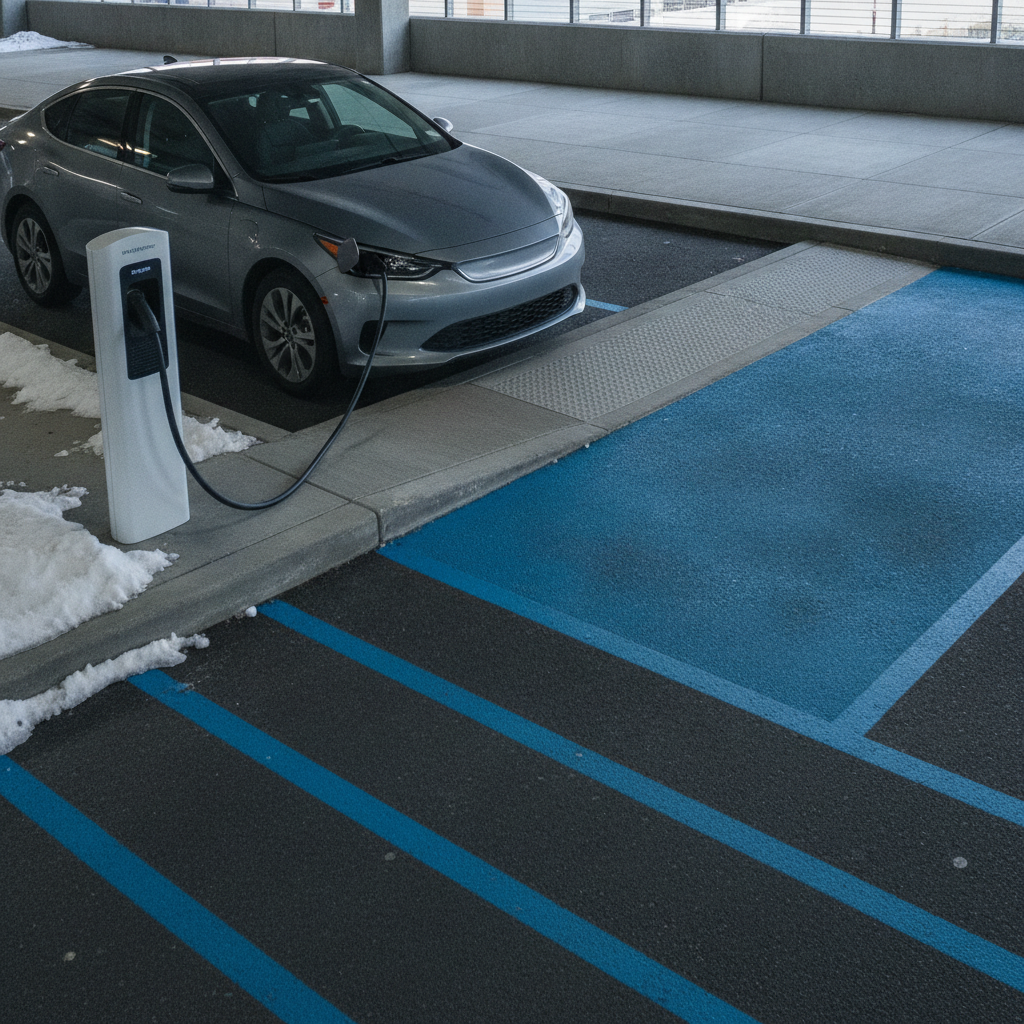
A charger that some drivers cannot reach is only half a charger. If you are planning EV charging station installation Syracuse NY businesses and property owners can be proud of, accessibility has to be part of the blueprint from the first sketch, not a retrofit after the concrete cures. Drivers with mobility devices, limited reach, or vision impairments want the same convenience everyone else expects: a space they can pull into, a connector they can handle, and a route to the front door that does not involve a curb or a puddle.
Designing accessible EV spaces can feel intimidating because it touches several disciplines at once: parking layout, grading, electrical routing, signage, and equipment selection. Add upstate weather, with snow piles that love to bury access aisles, and the planning gets even more interesting. The good news is that most accessibility wins come from smart early decisions rather than expensive hardware.
This guide walks through the practical side of designing ADA-conscious charging spaces: where to place them, how wide to make them, what reach and height considerations matter, how to handle winter, and how to work with licensed professionals and local officials. Whether you manage a retail plaza, a medical office, a restaurant, or a small apartment property in the region, you will come away with a clear checklist you can hand to your designer and electrician. We will also flag where to confirm exact dimensions and requirements with current official standards, since specifics should always be verified for your project.
Why Accessible Charging Deserves Early Planning
Accessibility decisions ripple through nearly every other part of a charging project. The location of the accessible space influences trenching distance, which influences cost. The route from the space to the entrance influences curb ramp placement, which influences grading and drainage. If these choices are made last, you often discover that the best electrical location conflicts with the best accessible route.
Planning early also protects your investment. Retrofitting a space after opening can mean cutting asphalt, relocating conduit, and replacing equipment that sits too high or too far from the stall. Getting it right the first time is almost always cheaper. A reliable local contractor offering EV Charger Installation Cicero NY and surrounding communities can review a site plan before construction starts and flag conflicts between electrical, paving, and access requirements.
Beyond compliance, there is a business case. Accessible charging widens your customer base, signals that your property welcomes everyone, and reduces the risk of complaints or costly corrections. Treat accessibility as a design feature, not a box to tick.
Understanding the Standards Behind the Design
Accessible design for public facilities generally follows the federal ADA Standards for Accessible Design, along with state and local building rules that may add or clarify requirements. Parking facilities already have well-known accessibility provisions, such as van-accessible spaces, access aisles, and accessible routes. EV charging adds a new layer, because the equipment itself must be usable by people with a range of abilities.
Federal guidance on EV charging has been evolving, and local interpretation can vary. That is why it is wise to treat any dimension you read in a blog post, including this one, as a starting point and confirm exact numbers against current official documents and with your local code officials. Your design professional or electrician can help interpret how the requirements apply to your specific lot.
A few principles hold steady regardless of the latest revision: the space should connect to an accessible route, the operable parts of the charger should be reachable, the connector and cable should be manageable, and the user should have enough clear room to maneuver. Designing around those principles keeps you in good shape even as details are updated over time.
Choosing the Right Location on Your Lot
Location is the single biggest lever. The most usable accessible charging space sits on the shortest accessible route to the building entrance, on the flattest part of the lot, and as close as practical to your electrical service. Those three goals sometimes pull in different directions, so you will need to balance them.
Start by walking the property the way a wheelchair user would. Look for cross slopes, cracked pavement, drainage grates, and snow storage areas. A space near the entrance is only helpful if the path is smooth and continuous. Then consider sightlines and lighting, since drivers should feel safe at night, which matters during long upstate winters when darkness arrives early.
If you are scoping a new installation, working with a team experienced in EV Charging Station Installation Syracuse NY projects helps you weigh trenching costs against walking distance. Sometimes moving the accessible space a few stalls closer to the panel saves thousands without hurting usability, provided the accessible route stays direct and unobstructed.
Space Dimensions, Access Aisles, and Layout
An accessible charging space needs room for two things: the vehicle and the person getting in and out of it. That is why access aisles matter. The aisle gives a driver space to deploy a ramp or lift, transfer to a mobility device, and reach the charger without standing in a travel lane. Aisles must be kept clear, which means no bollards, planters, or equipment pads in the way.
Consider how the aisle relates to the charger. If the equipment sits at the head of the stall, the cable must reach the vehicle’s charge port, which can be on the front, side, or rear depending on the model. A pedestal placed between two stalls can serve both, but it should not encroach on either aisle. Good layouts often pair an accessible stall and a standard stall so the shared equipment is usable from both sides.
Pay attention to surface quality too. The stall and aisle should have a firm, stable, slip-resistant surface with gentle slopes. Pooling water freezes into ice, so grade the area to drain away from the aisle. Confirm exact stall and aisle widths with current standards and your local code official before striping.
Reach Ranges, Connector Height, and Cable Management
Even a perfectly sized space fails if the charger is awkward to operate. Reach range is the term for the vertical zone where buttons, screens, card readers, and connectors should sit so people seated in wheelchairs or with limited reach can use them. Mounting equipment too high is among the most common mistakes, especially with wall-mounted units copied from residential garages.
Think through the whole user journey. Can someone read the screen from a seated position? Can they tap a card or phone without twisting? Is the connector holster within reach, and is the cable light and flexible enough to handle one-handed? Heavy, stiff cables are difficult for users with limited grip strength, so look for lighter cable options and retractors or overhead boom systems that keep cable off the ground.
Cable management also protects the public. A cable draped across an accessible route is a tripping hazard and can block a wheelchair. Choose equipment with a clear parking position for the connector, and place it so the cable does not cross the aisle when the charger is idle.
Designing for Syracuse Snow, Ice, and Slush
Central New York winters can undo the best accessibility design. Plows push snow into whatever open space they find, and an access aisle looks like open space. If your maintenance crew is not told otherwise, the aisle may become a snowbank by January, effectively closing the space to anyone who needs it.
Solve this on paper before the first storm. Designate snow storage areas away from charging stalls and aisles, and add that instruction to your snow removal contract. Mark pedestals and bollards so plow operators can see them under fresh snow, and consider taller markers that rise above typical drifts. Keep the pedestal base on a raised pad so slush does not collect around connections.
Surface choices matter too. Pavement that drains well and avoids low spots reduces ice patches along the route. Good lighting helps users spot slick areas after dark. For deeper guidance on cost drivers that winter-ready design can influence, review How Much Does EV Charging Station Installation Cost in Syracuse NY? before finalizing your budget.
Accessible Routes and the Walk to the Door
The charging space is only one link in a chain. The route from the stall to the building entrance must also be accessible, which means continuous, appropriately sloped, and free of abrupt level changes. A single unramped curb can make an otherwise ideal space unusable.
Look at where the accessible route crosses drive aisles. Curb ramps should align with the route, and crosswalk markings help drivers recognize pedestrian crossings. Check for hazards like protruding signs, low-hanging branches, or equipment that narrows the path. Wheel stops, if used, should not intrude on the aisle or route.
Lighting along the route improves safety for everyone. Thoughtful illumination also helps people with low vision follow the path and read signage. Many properties pair charger installation with exterior lighting upgrades, since trenching for one often creates an opportunity for the other. If you are also refreshing interior spaces at the same time, you might enjoy browsing Custom Lighting Installation Ideas for Syracuse Kitchens, Baths, and Finished Basements for ideas that complement a broader upgrade plan.
Signage, Striping, and Wayfinding
Clear signs prevent misuse and help drivers find the right space. An accessible EV space typically combines the familiar accessibility symbol with charging-specific signage, and it should be readable at a glance from a moving vehicle. Mount signs at a height that stays visible above parked vehicles and snowbanks.
Striping serves a similar role on the ground. Fresh, high-contrast paint helps define the stall and the access aisle, but remember that paint fades and snow hides it. Plan for periodic re-striping and consider durable materials rated for freeze-thaw cycles. Add directional signs at the lot entrance if the accessible EV space is not immediately visible.
Digital wayfinding helps too. List the accessible space in your charging network app and on your website, and describe it plainly, including how far it is from the entrance. Tell drivers what payment options exist, since not everyone can manage every interface. Offering multiple ways to start a session, such as tap-to-pay, an app, or a simple card reader, makes the experience more inclusive.
Interface Accessibility and User Experience
Hardware is only part of usability. The charger’s interface should be understandable to people with varied abilities, including those with low vision, limited dexterity, or cognitive differences. Look for equipment with clear, high-contrast displays, tactile or audible feedback, and straightforward prompts that do not time out too quickly.
Consider how someone with limited fine motor control would start a session. Large buttons or tap-to-pay options often beat tiny touchscreens. For users who prefer mobile apps, confirm the app works with common screen readers and offers adjustable text size. Provide a phone number for support, and make sure the sign shows it in large, readable type.
Reliability is an accessibility issue as well. An out-of-order charger hurts every driver, but it hurts those with fewer alternatives the most. Choose equipment with remote monitoring so faults are flagged quickly, and set a maintenance schedule that includes cleaning screens, checking cable condition, and testing the connector latch. A well-maintained station is a more welcoming one.
Quick Reference: Design Checklist
Use this table as a planning aid when meeting with your designer, electrician, and local officials. Treat the items as discussion points rather than final specifications, and verify exact requirements before construction.
| Design Element | What to Consider | Winter Note |
|---|---|---|
| Stall and access aisle | Room for ramps, lifts, and transfers; keep aisle clear | Exclude from snow storage |
| Accessible route | Smooth, continuous path to the entrance with curb ramps | Grade to prevent pooling and ice |
| Charger controls | Reachable screen, reader, and connector | Use raised pad above slush |
| Cable management | Light cable, holster, no trip hazards | Keep cable off wet pavement |
| Signage and lighting | High visibility, readable at night | Mount above snowbank height |
Working With Electricians, Designers, and Officials
A successful accessible charging project is a team effort. Your electrician handles power capacity, conduit routing, and equipment installation. A site designer or architect handles layout, grading, and accessibility details. Your local code officials review plans and inspect the finished work. Bringing them together early prevents the finger-pointing that happens when conflicts surface late.
Ask your electrician about panel capacity, since adding several chargers may require service upgrades or load management. Ask your designer to show the accessible route and aisle on the plan set, and request a review from the building department before bidding. Keep documentation of equipment specifications, including mounting heights and cable details, so you can demonstrate compliance if questions arise.
Finally, plan for the future. Even if you install only one or two chargers today, run conduit and size panels so you can add more later without tearing up the lot. Design the first accessible space so it can remain the best-located one as the project grows.
Where to Go From Here
Accessible EV charging comes down to a handful of thoughtful choices made early: put the accessible space on the shortest, smoothest route to the entrance, give it room for ramps and transfers, mount equipment within comfortable reach, and protect the aisle from winter snow. Add clear signs, good lighting, and reliable equipment, and you have a station that welcomes every driver instead of just most of them.
Remember that standards evolve and local interpretation varies, so confirm current requirements with your design professional and building officials rather than relying on any single article. Build in some flexibility, too. A well-planned conduit run and a right-sized panel make future expansion simple, and a clear maintenance routine keeps the station dependable through the coldest months.
If you manage a property in the region and want to move from planning to action, start with a site walk. Bring your electrician, your designer, and whoever handles snow removal, and look at the lot together. You will spot conflicts, opportunities, and cost-saving shortcuts that no desk review can reveal. Do that, and your charging space will serve customers, tenants, and visitors of every ability for many winters to come, while reflecting well on your business and your community.