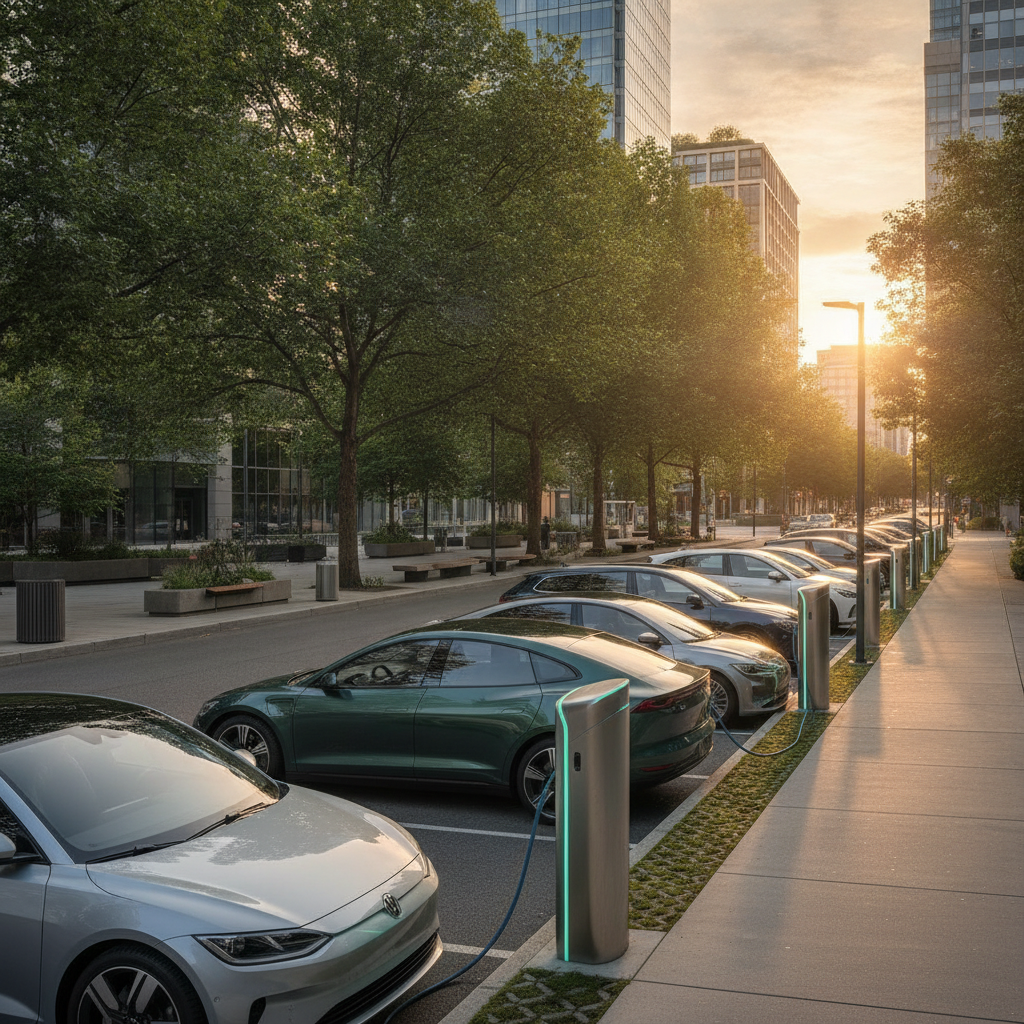
Every year, more drivers in Central New York switch to electric vehicles, and every year the same question gets louder: where do they plug in when they are away from home? For residents who live in rental housing, older neighborhoods without garages, or apartments with no assigned parking, public charging is not a convenience. It is the only way an EV works for them at all. That puts town boards, village councils, and city planners in a powerful position. The decisions they make about parking lots, parks, libraries, and municipal buildings can determine whether electric driving is open to everyone or reserved for people with private driveways.
The good news is that expanding public charging does not require a giant budget or a brand new program. Many municipalities already own the most valuable ingredient: well-located land with existing electrical service. What they need is a clear process for choosing sites, paying for upgrades, and keeping equipment reliable through brutal lake-effect winters. This guide walks through the practical side of EV Charging Station Installation Syracuse NY communities can use as a model, from site selection and funding to equity, maintenance, and public outreach. Whether you are a local official, a developer working with a town, or a business owner curious about public-private partnerships, you will find concrete steps you can act on this year.
Why Public Charging Is a Community Infrastructure Issue
Roads, sidewalks, and streetlights were never built by individual homeowners. They exist because communities decided shared access to mobility was worth funding together. Public EV charging fits the same logic. When a resident cannot install a charger at home, a nearby public station becomes the equivalent of a gas station on their route, and without it, buying an electric vehicle simply is not practical.
There is also an economic angle that municipalities sometimes overlook. Drivers who stop to charge tend to spend time, and often money, at nearby shops, cafes, and services. A station placed near a village main street can quietly support local retail traffic during otherwise slow hours. Towns that treat charging as part of economic development, not just an environmental gesture, tend to find broader support among residents and business owners.
Finally, visible charging signals that a community is planning for the future. Employers, families, and visitors notice. Working with a licensed team that handles Cicero NY EV charger installation and similar projects across the region helps local governments move from vague interest to a buildable, code-compliant plan.
Choosing Municipal Sites That Actually Get Used
The most common mistake in public charging is putting stations where the electrical panel happens to be rather than where drivers actually go. A charger tucked behind a public works garage may be cheap to wire, but if nobody parks there, it earns no goodwill and no usage. The best municipal sites share three traits: steady foot traffic, safe lighting, and something worth doing for an hour or two nearby.
Libraries, town halls, recreation centers, farmers market lots, and trailheads all work well because visitors naturally stay a while. A Level 2 charger is a good fit for these dwell times, since a two-hour visit adds a meaningful amount of range. Parking lots next to restaurants or a small business district can serve both residents and travelers passing through.
Before committing, walk the site at different times of day. Check sightlines from nearby buildings, existing lighting levels, snow storage patterns, and how close the parking area sits to an electrical service. Municipalities exploring EV charger installation for municipalities often start with a short site assessment, because a few hours of evaluation can prevent expensive trenching surprises later.
Starting Small With a Phased Rollout
Many officials assume a public charging program means a large, expensive launch. In practice, the smartest approach is usually phased. Begin with one or two well-placed ports at a high-visibility site, learn how residents use them, and expand based on real data instead of guesses. This keeps early costs manageable and gives the board something concrete to show taxpayers.
A phased plan also protects against technology changes. Charging hardware and payment systems evolve quickly, and a town that buys twenty units at once may end up locked into aging equipment. Rolling out in stages lets you adopt improved networking, better payment options, and more efficient hardware as each phase arrives.
The key trick is installing infrastructure once and filling it gradually. Running conduit and sizing electrical capacity for future ports during the first phase costs far less than reopening pavement later. Even if only two chargers go live today, the underground pathways can be sized for six or eight. For anyone weighing this approach, professional EV Charging Station Installation Syracuse NY providers can map out a first phase that leaves room to grow without overbuilding.
Understanding Electrical Capacity Before You Commit
Electrical service is the quiet gatekeeper of every charging project. A municipal building that runs comfortably on its current panel may have no spare capacity for even two Level 2 chargers running at once. Discovering that after budgets are approved is one of the most frustrating delays a project can face.
An early load review answers the essential questions. How much capacity does the building use during peak hours? How much headroom remains in the panel and the service entrance? Can the transformer serve more load, or will the utility need to be involved? These answers shape whether you need a small panel upgrade, a new dedicated service, or simple load management software that shares power between chargers.
Load management is especially useful for towns with older buildings. Instead of paying for a major upgrade, smart controls throttle charging speeds when demand rises elsewhere on the property. Officials who want a deeper look at the technical side can read Can Your Syracuse Electrical Service Support Multiple EV Chargers? before meeting with an electrician, which makes those first conversations far more productive.
Budgeting, Grants, and Utility Programs
Funding is where many public charging ideas stall, but municipalities have more options than they often realize. State and federal programs, utility incentives, and regional sustainability initiatives have all supported charging projects in recent years. Availability and eligibility change over time, so it is smart to confirm current details directly with the program administrators before building a budget around any single source.
Beyond grants, a realistic budget accounts for more than hardware. Electrical work, trenching, concrete pads, signage, striping, networking fees, and ongoing maintenance all belong in the plan. Costs vary widely depending on distance from the electrical service and the type of charger selected, which is why a written site estimate beats a rough guess every time. For a practical breakdown of what drives price differences, review How Much Does EV Charging Station Installation Cost in Syracuse NY? and use it to frame your own line items.
Boards should also decide early whether charging will be free, priced to recover electricity costs, or priced to generate modest revenue. Each choice affects how the program is perceived and how quickly it pays for itself.
Comparing Common Municipal Charging Options
Not every location needs the same equipment. The table below compares the three setups municipalities most often consider, with general guidance on how each one fits public use. Exact figures depend on the chosen model and site conditions.
| Charger Type | Best Public Location | Typical Stay | Relative Cost |
|---|---|---|---|
| Level 2 networked | Libraries, parks, town halls | 1 to 4 hours | Lower |
| Level 2 with load sharing | Older buildings, shared lots | 1 to 4 hours | Moderate |
| DC fast charging | Highway corridors, transit hubs | 20 to 45 minutes | Highest |
For most small communities, Level 2 is the practical starting point. Fast charging makes sense only where traffic volume and electrical capacity justify the investment.
Equity and Access for Every Neighborhood
A charging network that only serves affluent areas misses the whole point of public infrastructure. The residents who benefit most from public chargers are those without garages, such as apartment renters, people in multifamily buildings, and households parking on the street. Planning should deliberately include neighborhoods where home charging is least available.
Practical steps help. Place chargers within walking distance of dense housing, not only near commercial strips. Keep pricing affordable and transparent so lower-income drivers are not priced out. Offer more than one way to pay, since not everyone is comfortable with app-only systems, and consider accepting tap-to-pay cards or providing a phone support line.
Accessibility matters too. Parking spaces, cable reach, and screen heights should work for drivers with disabilities, and paths from the space to the sidewalk must be clear year-round. Involving residents early through surveys or public meetings also surfaces needs that planners might miss, such as late-evening charging near shift-work neighborhoods.
Keeping Chargers Reliable Through Central New York Winters
Nothing damages public trust faster than a broken charger with a faded out-of-order sticker. Reliability is the real test of a municipal program, and the region’s climate makes it a serious challenge. Heavy snow, freezing rain, road salt, and long cold snaps all stress outdoor equipment.
Design choices can prevent many problems. Mount units high enough to stay above plowed snow banks, choose weather-rated enclosures, and keep cables off the ground with retractors or holsters. Position stations away from the spot where plows typically push snow, and mark them with bollards so equipment is not clipped during clearing.
Maintenance planning matters just as much as hardware. Assign clear responsibility for inspections, set up remote monitoring so faults are flagged quickly, and keep a service agreement in place with a qualified electrician. A simple seasonal checklist covering connectors, cable condition, screens, and signage catches small issues before they become closures. Reliable stations quietly earn community support.
Partnering With Local Businesses and Developers
Municipalities do not have to carry every project alone. Public-private partnerships can stretch limited budgets and accelerate timelines. A town might provide the land and permitting support while a private operator funds, installs, and maintains the equipment in exchange for a revenue share or a long-term lease.
Developers can contribute in a different way. Many towns now encourage or require new commercial and multifamily projects to include charging-ready infrastructure, meaning conduit and panel capacity are in place even if chargers are added later. This approach is far cheaper than retrofitting and builds public charging capacity without using taxpayer dollars.
Local businesses benefit when chargers sit near their storefronts, so some may be willing to contribute toward costs or host stations on private lots open to the public. Clear written agreements covering ownership, maintenance duties, pricing, and hours keep these partnerships smooth. The strongest arrangements treat every party as a stakeholder in keeping the stations dependable.
Permitting, Policy, and Public Communication
Even a well-funded project can stall in paperwork. Municipal officials can speed things up by reviewing their own zoning and permitting processes and removing unnecessary friction for charger projects. A short, clear checklist for applicants saves time for staff and builders alike, and keeps expectations realistic about inspections and utility coordination.
Policy updates can be modest. Some communities add language about charging-ready parking in site plan reviews, define signage standards, and clarify enforcement for vehicles that occupy charging spaces without plugging in. Simple rules about idle time limits keep spaces turning over and fair for everyone.
Communication is the final piece. Announce new stations through the town website, social media, and local newsletters, and list them on common charging maps so drivers can find them. Residents who understand why the project exists, what it costs, and how it will be maintained are far more likely to support the next phase. A short ribbon cutting or demo day can also introduce curious neighbors to the technology.
Measuring Results and Planning the Next Phase
A charging program should not be a one-time ribbon cutting. The most successful communities track results and use them to guide growth. Networked chargers record sessions, energy delivered, peak hours, and downtime, giving officials real evidence for budget discussions.
Look for patterns. If a library station is full every afternoon, add ports there. If a remote lot sees almost no use, consider relocating hardware to a busier site. Review complaints and uptime numbers quarterly, and survey users about pricing and placement.
These numbers also strengthen future grant applications, since funders want proof that earlier investments were used well. Share summaries with the public so taxpayers see tangible returns. Over time, the data tells you whether to expand, adjust pricing, add fast charging at a key corridor, or partner with another operator. Treat the first stations as a learning tool, and the network that follows will be better designed and easier to defend.
Your Next Steps
Expanding public charging is less about grand gestures and more about steady, well-informed decisions. Start by identifying two or three municipal sites where people already spend time, such as a library lot, a recreation area, or a village center. Confirm the available electrical capacity, price out a modest first phase, and size the infrastructure so more ports can be added later without tearing up pavement.
From there, line up funding, whether through grants, utility incentives, or a partnership with a local business. Build equity into the plan so renters and residents without garages benefit first. Choose weather-ready equipment, assign maintenance responsibility, and set up monitoring so chargers stay dependable through the harshest months. Pair all of it with clear communication so residents know where stations are and how to use them.
Communities across the region, including those around Cicero, are discovering that public charging pays off in goodwill, local spending, and long-term readiness. You do not need to solve everything at once. You simply need to begin with a smart first site, learn from real usage, and keep improving. If your board, business, or development team is ready to move from discussion to a buildable plan, an experienced local electrician can turn those early ideas into a safe, code-compliant installation that serves drivers for years to come.